

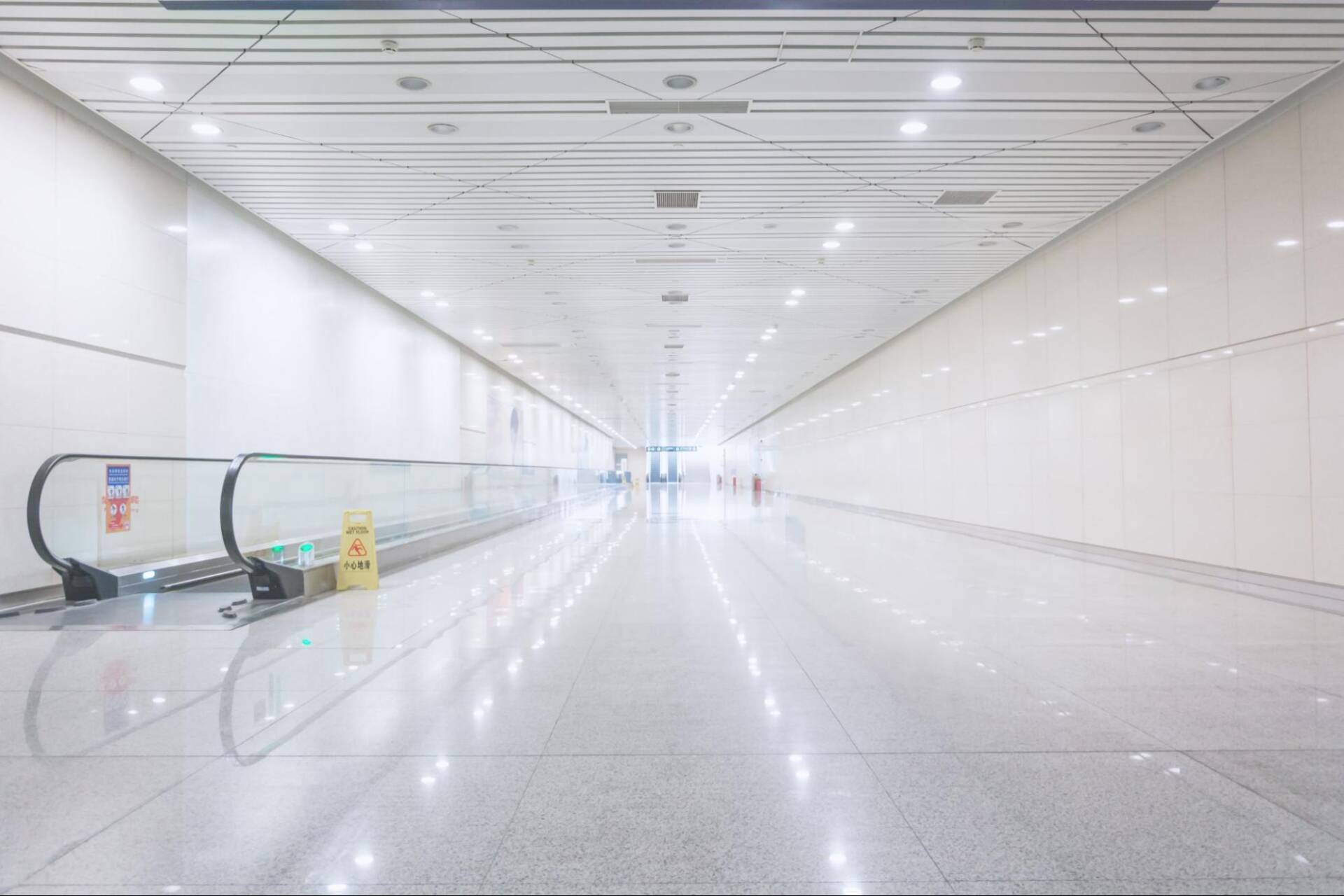
Aviation facilities deal with constant activity. Employees, passengers, service carts, maintenance equipment, vehicles, luggage, and aircraft operations can all contribute to dirt, spills, tire marks, and general surface wear. Because painting in aviation environments requires attention to durability, cleanliness, and ongoing facility operations, flooring systems also need to support demanding day-to-day conditions.
For airports and aviation facilities in Georgia, maintaining clean floors is an important part of daily facility care. Airport epoxy flooring can provide a durable, smooth surface that supports routine cleaning in high-use areas. Its finish, resistance to many common contaminants, and ability to accommodate regular maintenance make it a practical option for hangars, maintenance areas, service corridors, equipment rooms, and other aviation spaces.
Why Cleanable Flooring Matters in Aviation Facilities
Airport floors are exposed to constant activity and a wide range of operational conditions. Oil, grease, hydraulic fluids, dirt, moisture, cleaning products, luggage wheels, carts, tools, and vehicle traffic may all come into contact with flooring throughout the day.
Airport epoxy flooring can help create a consistent surface that supports regular maintenance. A smooth, properly installed coating gives cleaning crews a practical surface for sweeping, mopping, scrubbing, and other routine procedures.
Cleanability is especially important in aviation environments where large areas may need to be maintained on strict schedules. Airport epoxy flooring can help facility teams keep work areas orderly while supporting ongoing operations.
Cleanability Benefits of Airport Epoxy Flooring
Airport epoxy flooring offers several characteristics that can support daily maintenance in aviation facilities.
Seamless surfaces can reduce areas where dust and debris collect.
Smooth finishes can support sweeping, mopping, and mechanical cleaning.
Many spills can remain visible on the surface for quicker identification.
Certain epoxy systems can be selected for resistance to oils, chemicals, and other operational substances.
Floor markings and color-coded zones can be incorporated into the flooring system.
The coating can support consistent cleaning across large operational spaces.
Different textures and finishes can be selected based on the needs of the facility.
These qualities make airport epoxy flooring a useful option for aviation areas where regular cleaning, organization, and surface performance are priorities.
Seamless Surfaces Can Support Routine Maintenance
One of the most useful characteristics of epoxy flooring is the continuous surface it can create over a properly prepared substrate.
Fewer Joints and Surface Interruptions
A seamless finish can help reduce the number of small joints, gaps, or surface transitions that cleaning crews need to work around.
Airport epoxy flooring can provide a consistent surface throughout hangars, equipment rooms, maintenance spaces, and service corridors. This can make routine cleaning procedures easier to plan and carry out across larger areas.
The flooring system can also be designed around the operational requirements of the space, including traffic patterns, drainage considerations, and cleaning procedures.
Easier Movement for Cleaning Equipment
Many aviation facilities use commercial scrubbers, sweepers, and other equipment to maintain large floor areas.
A properly installed airport epoxy flooring system can provide a smooth surface for this equipment to travel across. Maintenance teams can move through work zones more efficiently while keeping cleaning procedures consistent.
This can be particularly useful in large hangars or service areas where floor maintenance needs to be completed without creating unnecessary delays.
Airport Epoxy Flooring Can Support Spill Management
Spills are a normal concern in many aviation environments. Oils, lubricants, maintenance fluids, cleaning products, and other substances may reach the floor during everyday operations.
Keeping Spills Visible on the Surface
Airport epoxy flooring can help create a surface where spills are easier to identify and address.
A consistent finish can make fluid, residue, or dirt more noticeable during routine inspections. This gives maintenance teams an opportunity to respond according to facility procedures.
The appropriate airport epoxy flooring system can also be selected based on the substances commonly used within a particular aviation area.
Supporting Regular Cleaning Procedures
Cleaning requirements can vary considerably between terminals, maintenance areas, hangars, baggage spaces, and equipment rooms.
Airport epoxy flooring can be designed to work with the maintenance procedures used in each environment. This may include frequent sweeping, mechanical scrubbing, mopping, or specialized cleaning processes.
Matching the flooring system to the facility’s cleaning requirements helps support long-term performance.
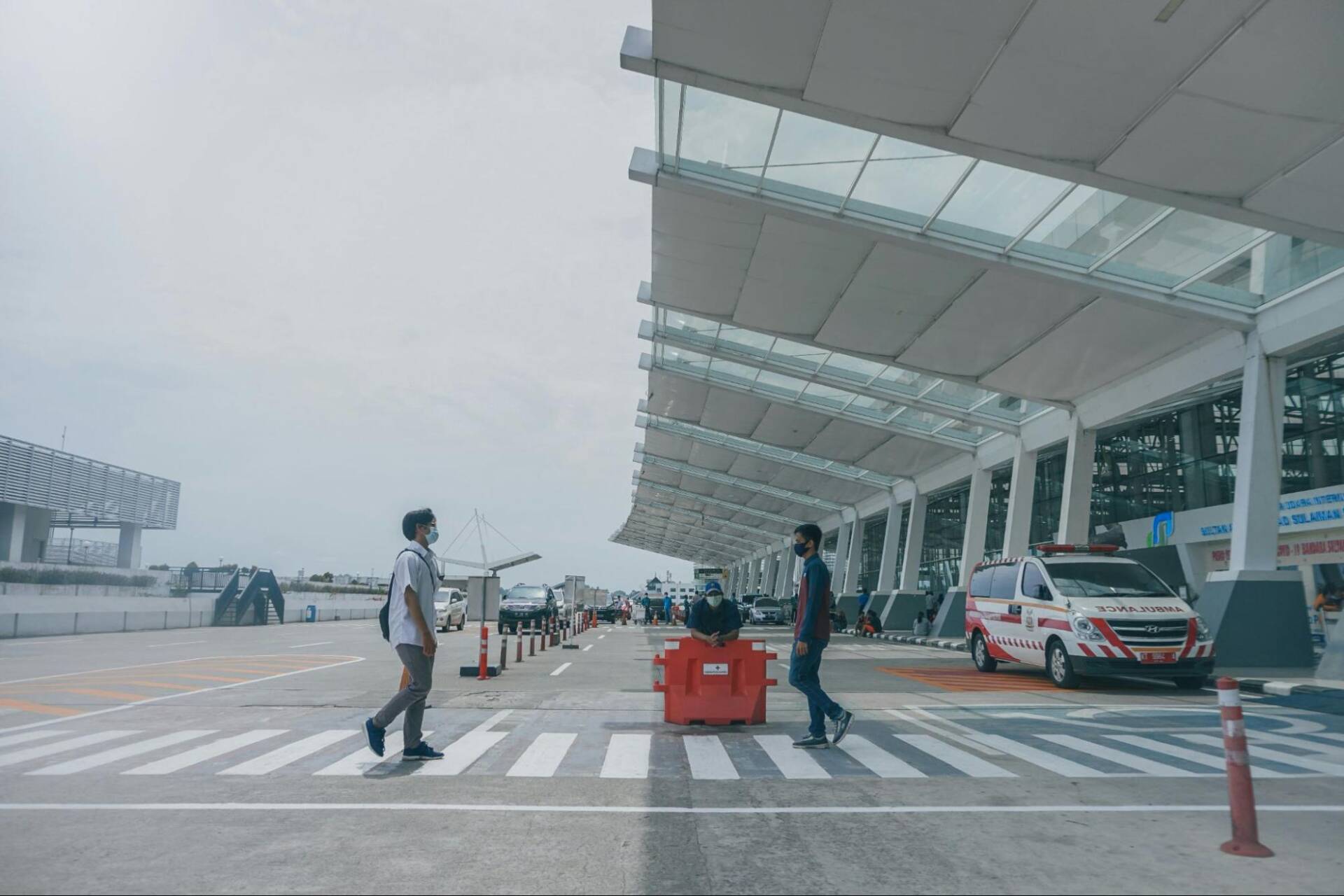
Airport Epoxy Flooring Can Be Designed for Frequent Cleaning
Aviation facilities often follow detailed cleaning schedules based on traffic levels, facility use, and operational needs. Airport epoxy flooring can be selected to support these maintenance routines across different aviation spaces.
Passenger Areas: High-traffic areas may require frequent sweeping, mopping, or mechanical cleaning throughout the day.
Maintenance Bays: These spaces may need more specialized cleaning due to equipment activity, fluids, and routine maintenance work.
Service Areas: Airport epoxy flooring can support regular cleaning in corridors, equipment rooms, and other operational spaces.
Georgia Climate Conditions: Humidity, seasonal rain, outdoor traffic, and moisture carried indoors can influence flooring and maintenance requirements.
Facility-Specific Maintenance: Selecting airport epoxy flooring based on the way each space is used can help create a surface that fits established cleaning procedures and daily operations.
Proper Surface Preparation Supports Flooring Performance
The performance of airport epoxy flooring depends heavily on proper preparation before the coating system is installed.
Evaluating the Existing Surface
Before installation, the existing floor should be reviewed for its overall condition, moisture levels, previous coatings, repairs, and other factors that may affect adhesion.
Preparation methods can vary depending on the surface and the selected airport epoxy flooring system. Contractors may use cleaning, grinding, coating removal, repairs, or other preparation techniques where appropriate.
The goal is to create the right surface profile for the new coating system.
Creating a Consistent Base for the Coating
Careful preparation supports a more consistent finished surface and helps the airport epoxy flooring system perform as intended.
A stable, properly prepared base also makes it easier to achieve the finish, texture, and thickness required for the space.
In aviation environments, this preparation should also be coordinated with access requirements, work schedules, and ongoing facility operations.
Different Aviation Areas May Need Different Epoxy Systems
Every section of an aviation facility serves a different purpose, so flooring requirements can vary across the property.
Hangars and Maintenance Areas
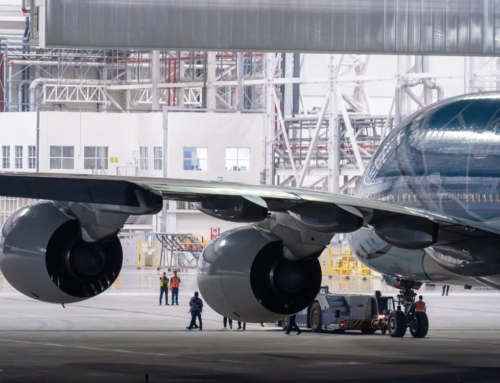
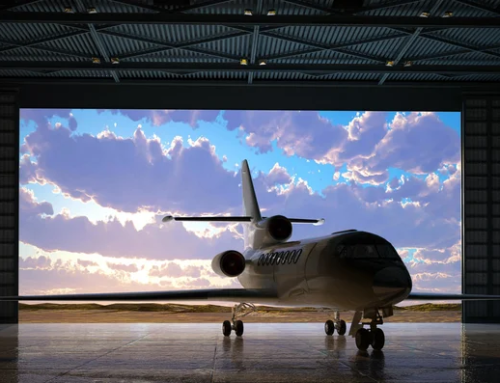
Aircraft hangars and maintenance spaces may experience equipment movement, vehicle traffic, tools, fluids, and frequent cleaning.
Airport epoxy flooring used in these areas can be selected according to expected traffic levels, chemical exposure, surface texture, and maintenance procedures.
A properly specified system can help create a clean and organized work surface that supports everyday aviation operations.
Service Corridors and Operational Spaces
Service corridors, baggage areas, storage rooms, and equipment spaces may have different traffic patterns and cleaning schedules.
Airport epoxy flooring in these areas can provide a consistent finish while supporting carts, equipment movement, and routine facility maintenance.
The flooring system should be selected based on how each area is actually used rather than applying one specification across every space.
Floor Markings Can Help Keep Aviation Spaces Organized
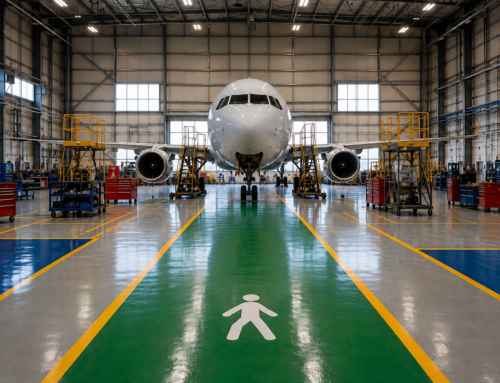
Airport epoxy flooring can be integrated with floor striping, designated work areas, traffic lanes, pedestrian routes, and color-coded zones. These markings help define how different areas should be used and can make it easier for employees to identify equipment locations, walking paths, vehicle routes, and active work zones.
A clearly organized floor layout can also support routine maintenance by helping cleaning crews see which areas need attention and how to move through the space efficiently. When airport epoxy flooring and floor markings are planned together, the result can support cleaner, more organized aviation operations.
Durability Supports Long-Term Cleanability
Aviation facilities need flooring systems that can handle regular activity while continuing to support established maintenance procedures.
Airport epoxy flooring can be specified for different levels of traffic, equipment use, and operational exposure. Maintaining a stable surface allows cleaning teams to follow consistent procedures throughout the life of the coating system.
Regular inspections and appropriate maintenance can also help preserve the appearance and performance of airport epoxy flooring over time.
For busy aviation properties in Georgia, selecting the right coating system can support both facility upkeep and long-term flooring performance.
Choose Socium Coatings: Your Trusted Airport Epoxy Flooring Partner in Georgia
Aviation flooring needs to support cleaning, traffic, maintenance procedures, and daily operations without creating unnecessary complications. Socium Coatings provides commercial coating solutions for aviation facilities throughout Georgia, including airport epoxy flooring for hangars, maintenance areas, service spaces, equipment rooms, and other operational environments. Each project is planned around surface conditions, facility requirements, scheduling, and long-term performance.
Contact Socium Coatings to discuss an airport epoxy flooring system suited to the needs of your aviation facility.




Leave A Comment