

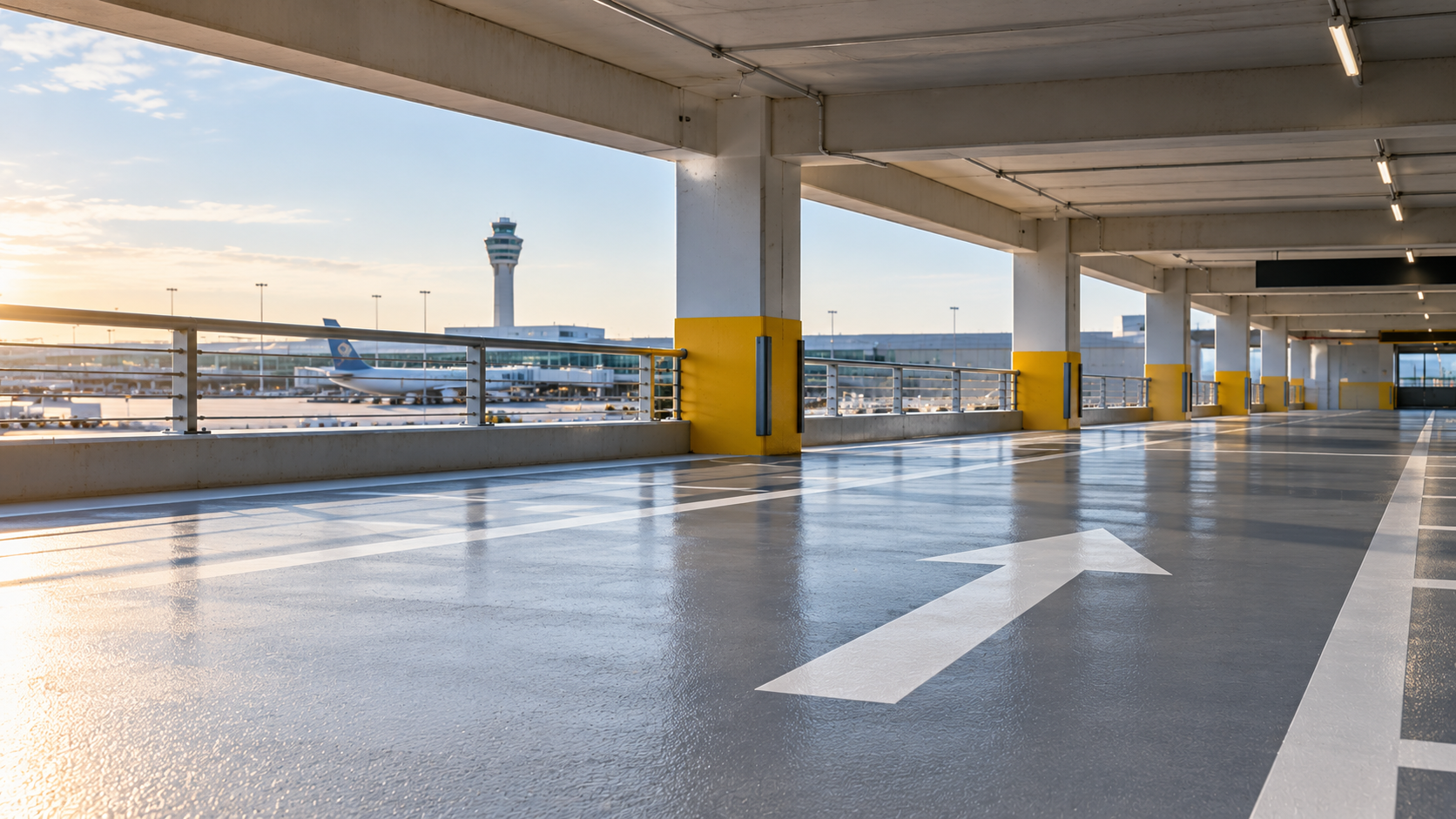
Airport parking decks experience constant vehicle movement, changing weather conditions, and exposure to water, road salts, oil, and other contaminants. Over time, these conditions can affect the performance of protective floor coatings, particularly in areas with heavy traffic, frequent turning, and repeated braking. Without appropriate maintenance, coating deterioration can leave concrete surfaces more vulnerable to moisture intrusion, staining, and further damage.
Airport parking deck maintenance plays an important role in preserving the condition of parking structures and identifying coating problems before they become more extensive. For airport facility managers, property operators, and maintenance teams, understanding how to inspect, clean, and maintain coated parking surfaces can support better long-term facility management.
Common Problems That Affect Airport Parking Deck Coatings
Surface Wear in High-Traffic Areas
Entrances, exits, ramps, ticketing lanes, and turning zones often experience more concentrated traffic than other parts of a parking deck. Repeated vehicle movement can gradually wear the coating, particularly where tires frequently turn or vehicles brake.
Visible signs may include changes in surface texture, worn patches, loss of the original finish, and localized coating damage. These areas should receive particular attention during routine inspections because deterioration can progress differently across the structure.
A maintenance plan should identify high-traffic zones and assess them more frequently when conditions warrant. Depending on the coating system and the extent of wear, repairs may involve localized recoating or a more extensive restoration.
Water Intrusion and Moisture-Related Damage
Parking decks are exposed to rainwater, vehicle-borne moisture, and, in colder climates, water containing de-icing salts. If water passes through a damaged coating system or enters through cracks and joints, it can contribute to concrete deterioration and potentially affect reinforcing steel.
Warning signs include peeling or blistering coatings, damp areas, staining, cracks, and visible deterioration around joints or drainage points. Not every stain indicates coating failure, so identifying the source of moisture is an important part of the assessment.
Airport parking deck maintenance should include checking drainage paths, coating transitions, joints, and other vulnerable details. Where water intrusion is suspected, the underlying cause should be investigated before a replacement coating is applied.
Peeling, Blistering, and Delamination
Coating failure can occur when a system loses adhesion to the concrete substrate. Contributing factors may include inadequate surface preparation, moisture within the substrate, incompatible materials, or wear that has progressed beyond the coating’s intended performance limits.
Peeling, blistering, and areas where the coating separates from the surface can indicate that the protective system is no longer performing as intended. Simply applying another layer over damaged material may not resolve the problem.
The affected area should be assessed to determine the extent of the failure and whether the underlying concrete has been damaged. Repairs may require removing compromised coating, preparing the substrate, addressing moisture-related issues, and installing a compatible replacement system.
Cracks and Deteriorated Joints
Cracks and joints are important areas to monitor because they can provide pathways for water to enter the structure. Movement, temperature changes, aging materials, and structural conditions can all contribute to deterioration.
During inspections, maintenance teams should look for widening cracks, damaged sealants, separation around joints, and deterioration where horizontal surfaces meet walls or other structural elements.
The appropriate repair depends on the cause and location of the defect. Some issues may require sealant replacement or localized repairs, while others need evaluation by a qualified structural or waterproofing professional. Treating the surface without understanding the underlying problem may lead to recurring damage.
Best Practices for Airport Parking Deck Maintenance
Establish a Regular Inspection Schedule
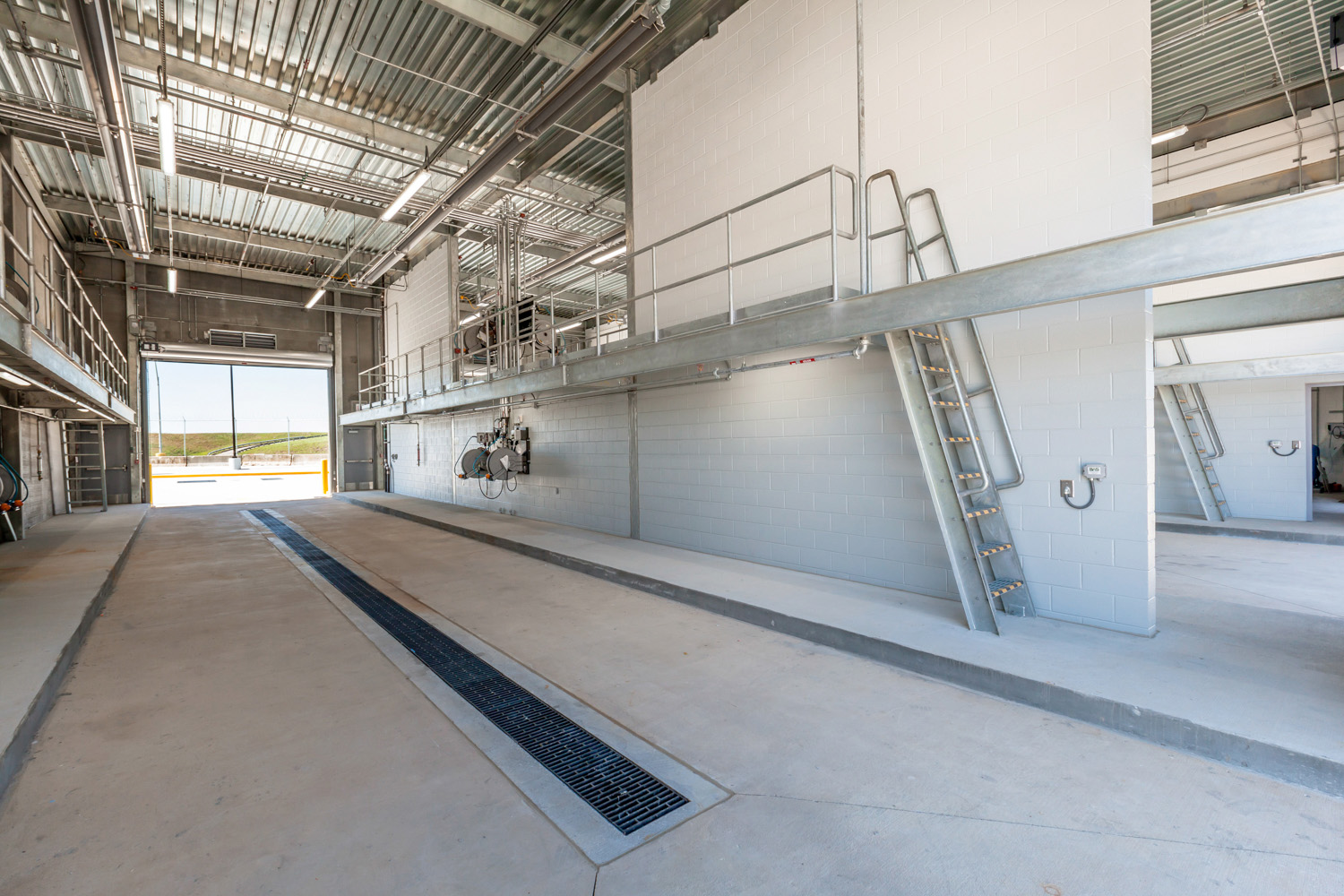
Routine inspections help identify early signs of coating wear and allow maintenance teams to track changes over time. Inspection frequency should reflect the parking deck’s traffic levels, environmental exposure, coating system, and previous maintenance history.
High-use areas such as ramps, entrances, exits, and payment lanes deserve particular attention. Inspectors should also examine drainage points, expansion joints, transitions, and areas where standing water frequently occurs.
Documenting the location and condition of defects helps facility managers compare findings across inspections and prioritize repairs. Photographs and maintenance records can also help contractors understand how deterioration has developed.
Keep Coated Surfaces Clean
Dirt, sand, oil, tire residue, and other contaminants can accumulate on parking deck surfaces. If left in place, these materials may affect appearance, complicate inspections, and contribute to surface wear.
A suitable cleaning schedule should account for traffic volume, seasonal conditions, and the coating manufacturer’s maintenance recommendations. Sweeping or mechanical cleaning can remove loose debris, while compatible cleaning products may be needed for more persistent contamination.
Cleaning methods should be selected carefully. Aggressive chemicals, unsuitable equipment, or excessive pressure may damage certain coating systems. Facility managers should confirm that cleaning procedures are appropriate for the installed material.
Maintain Drainage Systems
Effective drainage is essential to parking deck maintenance. Water that remains on the surface for extended periods can increase exposure to moisture and contaminants, while blocked drains may contribute to pooling and localized deterioration.
Maintenance teams should check accessible drains, channels, and discharge points for debris and obstruction. They should also observe whether water flows toward the intended drainage locations or consistently collects in particular areas.
Recurring ponding may indicate more than a blocked drain. Surface irregularities, damaged drainage components, or other construction-related issues may require professional evaluation. Correcting the cause is important for protecting the coating system and the concrete structure.
Address Coating Damage Promptly
Small areas of coating damage can provide an opportunity to intervene before deterioration becomes more extensive. When defects are identified, the affected area should be assessed to determine whether the problem is limited to the coating or extends into the concrete.
Repairs should follow the requirements of the existing system, including appropriate surface preparation, material compatibility, and application conditions. In some cases, localized repairs may be sufficient. Widespread deterioration or recurring failures may indicate that a larger section of the deck requires restoration.
Prompt action can also help facility managers schedule work more efficiently and reduce the likelihood of unexpected closures.
Maintain Your Airport Parking Deck with Socium Coatings
Airport parking decks are important parts of aviation infrastructure, and keeping their surfaces in good condition requires consistent inspections, appropriate cleaning, and timely repairs. By monitoring high-traffic areas, maintaining drainage, and addressing coating deterioration early, facility managers can make more informed decisions about protecting their parking structures.
Socium Coatings provides commercial coating and renovation services for aviation environments, including airport parking deck projects. If your facility needs an assessment or is planning a parking deck coating renovation, contact Socium Coatings to discuss your project requirements and request a free estimate.




Leave A Comment