
A certified painting subcontractor in Georgia is one that holds documented supplier-diversity status (NABE, MBE, or City of Atlanta EBO/SBE) alongside operational credentials like SSPC surface-prep certification and OSHA 30 across the crew. For a commercial painting contractor in Atlanta, those certifications are what let a general contractor count the painting scope toward federal, GDOT, or City participation goals – and what signals the documentation discipline that protects schedule and QA on the rest of the build.
Painting sits late in the construction sequence, which means a sub that misses QA or slips schedule pushes substantial completion, retainage release, and certificate-of-occupancy turnover with it. On a federal scope, an aviation project, or a City of Atlanta job carrying diversity-supplier participation goals, the cost of choosing the wrong painting sub goes well beyond a punch list. It can put the GC’s bid math, schedule, and contract credits at risk.
That is why GCs running serious commercial painting scopes in metro Atlanta have moved away from price-first vendor selection. They are looking for a commercial painting contractor in Atlanta who arrives with the certifications, documentation discipline, and operational standards that protect the project – not one who learns those things on the job. A certified painting subcontractor in Georgia is no longer a nice-to-have on compliance-heavy work. It is the baseline.
What’s Actually at Stake When a Painting Sub Underperforms
The instinct on commercial painting is to treat it like a commodity scope. Coatings happen near the end, the materials look interchangeable on a spec sheet, and the lowest-bid sub usually wins the line item. That logic falls apart the moment the sub underperforms.
Schedule risk compounds downstream
When painting slips, everything behind it slips with it. Floor finishes, FF&E installation, commissioning, and inspection windows all stack up against a single trade running late. On a tight commercial schedule with weather windows, after-hours access, or staged turnover, a two-week paint delay is rarely just two weeks. It is two weeks plus the rescheduling cascade across every following trade.
Federal and diversity-supplier credit isn’t transferable
On scopes that count toward federal participation goals, GDOT requirements, or City of Atlanta EBO/SBE commitments, the certified status of your painting sub is part of the bid. If that sub fails and you have to substitute mid-project, the participation credit does not move with you. You bid the project on the strength of a certified supplier base. Losing one mid-stream creates a contract problem on top of a schedule problem.
QA failures on coatings are expensive to remediate
Coatings fail in expensive ways. Adhesion failure means you re-prep and re-coat – sometimes after the surrounding finishes are already in place. Color or sheen mismatch means selective re-work across visible areas. A failed inspection on a healthcare or aviation surface means containment, abatement protocols, and a re-inspection cycle that no commercial schedule is built to absorb. Every painting failure on a commercial scope is a multi-week event.
Why Certified Painting Subcontractors Reduce GC Risk
The certified-sub advantage is operational, not cosmetic. The certifications signal a level of process discipline that translates directly into fewer surprises on your job.
What certifications should a commercial painting subcontractor in Atlanta hold?
Certifications fall into two categories. The first is supplier-diversity status: Native American Business Entity (NABE) for federal-eligible diverse-supplier credit, MBE can help GCs satisfy federal, GDOT, or City participation goals, and City of Atlanta EBO/SBE registration for municipal work. The second is operational: SSPC certifications on surface preparation, OSHA 30 across the crew, and the federal-grade compliance standards that come with running federal, GSA, or DoD scopes regularly. A sub carrying both categories is a sub that has already been audited.
How certifications affect the GC’s bid math
On any project with diverse-supplier participation requirements, your sub list is the proof you submit with the bid. A painting subcontractor that closes a meaningful share of that goal frees up your other trades to be selected on capability rather than certification status. On federal projects, GDOT scopes, City of Atlanta jobs, and increasingly on private commercial work tied to public funding, this changes the math from “find the cheapest qualified sub” to “find the certified sub who is also fully qualified.” Those are different searches, and they often produce different shortlists.
Documentation discipline is the real differentiator
Certified subs working under federal-grade standards do not leave documentation as a post-project cleanup. Daily reports, environmental condition logs (dewpoint, humidity, surface temperature), substrate prep records, batch numbers, and submittal-package compliance arrive as part of the work product. On a federal scope this is mandatory. On a private commercial scope it is what separates a sub who can defend their work in a warranty dispute from one who cannot. Either way, the GC is the one who benefits.
What “Federal-Grade” Looks Like on a Commercial Atlanta Project
Federal-grade is often discussed as a paperwork standard, but on the ground it shows up in three operational areas that directly affect commercial outcomes.
Surface prep is where most coatings fail
Premature coating failure almost always traces back to inadequate surface preparation. SSPC standards (SP1 cleaning through SP10 near-white blast on metal, with dedicated profiles for concrete and previously-painted substrates) define what acceptable looks like. So do dewpoint and chloride testing, profile measurement, and humidity controls during application. A federal-grade sub treats prep as the actual scope and the topcoat as the finish. A price-first sub treats prep as time pressure. The Socium approach to industrial-grade surface prep is built on the first model. [verify with Socium SME: confirm SSPC certifications held by Socium painters and any internal QA hold-points used on commercial vs. federal scopes.]
Coatings systems matched to the operational environment
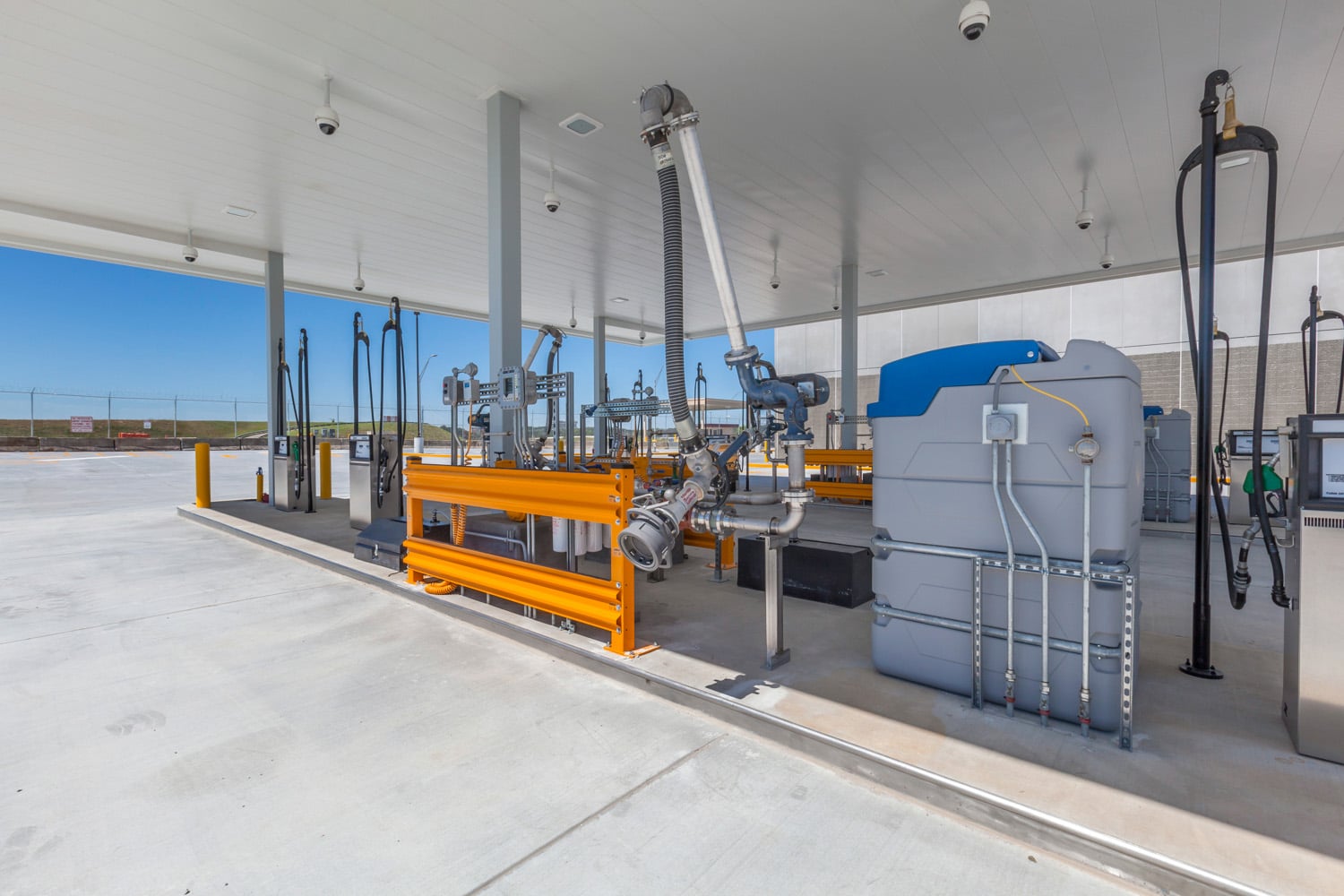
Spec generality is another silent cause of failure. Healthcare requires low-VOC, often antimicrobial finishes that survive routine disinfection cycles. Aviation hangars need chemical-resistant systems that handle hydraulic fluid, jet fuel, and cleaning agents. Industrial floors need high-build epoxy or polyurethane systems that take forklift traffic and thermal cycling. A generic latex spec applied to any of these will fail inside a year. A certified sub matches the system to the operating environment because they have built a library of what works in each sector.
Operating around live facilities
Most Atlanta commercial scopes are not greenfield. They are renovations and refits inside hospitals, airport facilities, distribution centers, and occupied office buildings. The sub’s ability to phase work around live operations – after-hours scheduling, dust and odor containment, negative-pressure setups, coordinated infection-control measures – is what makes the schedule actually hold. This is operational maturity, and it is something certified subs running aviation and healthcare work do every week.
How Atlanta GCs Vet a Commercial Painting Contractor
The vetting process for a commercial painting contractor in Atlanta is more practical than it looks. Most of the answer is in the bid documents and the walkthrough.
Five questions before you award the scope
Five questions surface most of what matters:
- Are the certifications current and on file (NABE, MBE, EBO/SBE, OSHA 30, SSPC where relevant)?
- Can the sub provide surface-prep documentation from a prior comparable project?
- Do they have references in your specific sector – aviation, healthcare, federal, industrial?
- What is their bonding capacity and insurance schedule?
- What is their actual schedule discipline track record on projects within 20% of your scope size?
If any of these answers come back vague, the bid number does not matter. The same questions apply when scoping interior repaints – see how a layered approach to commercial interior paint systems changes those answers.
Red flags during the bid walk
A few patterns repeat on subs who later fail. Vague responses on spec compliance. No mention of dewpoint, substrate testing, or environmental controls. No prepared QA submittal package. A bid number that is meaningfully below the rest of the cluster – usually a sign that prep, environmental controls, or documentation has been silently scoped out. None of these are dealbreakers individually, but stacked together they predict trouble.
Why local Atlanta presence matters
Local matters in two ways that are easy to underweight. Crew availability under tight schedules – Atlanta’s commercial market runs hot, and out-of-market subs have to mobilize against demand they did not forecast. And procurement familiarity – a sub who has run City of Atlanta EBO/SBE work, GDOT scopes, and Hartsfield-Jackson projects already understands the documentation cadence those owners require. That institutional knowledge does not show up on a bid sheet, but it shows up every week of the build.
Why Atlanta General Contractors Trust Socium Coatings
Socium Coatings runs commercial painting scopes across metro Atlanta and the Southeast under federal- and aviation-grade operating standards. The work is built on NABE federal-eligible diverse-supplier status, City of Atlanta EBO/SBE designations, surface-prep discipline aligned to SSPC, and the documentation cadence that compliance-heavy projects require from day one. GCs working healthcare, aviation, federal, and large commercial scopes use Socium when the cost of a painting failure is higher than the cost of choosing the right sub the first time.
If you are scoping a project that needs a certified painting subcontractor in Georgia who arrives ready to defend the work, request a scope review for your Atlanta commercial project and we will walk the bid with you.





Leave A Comment