
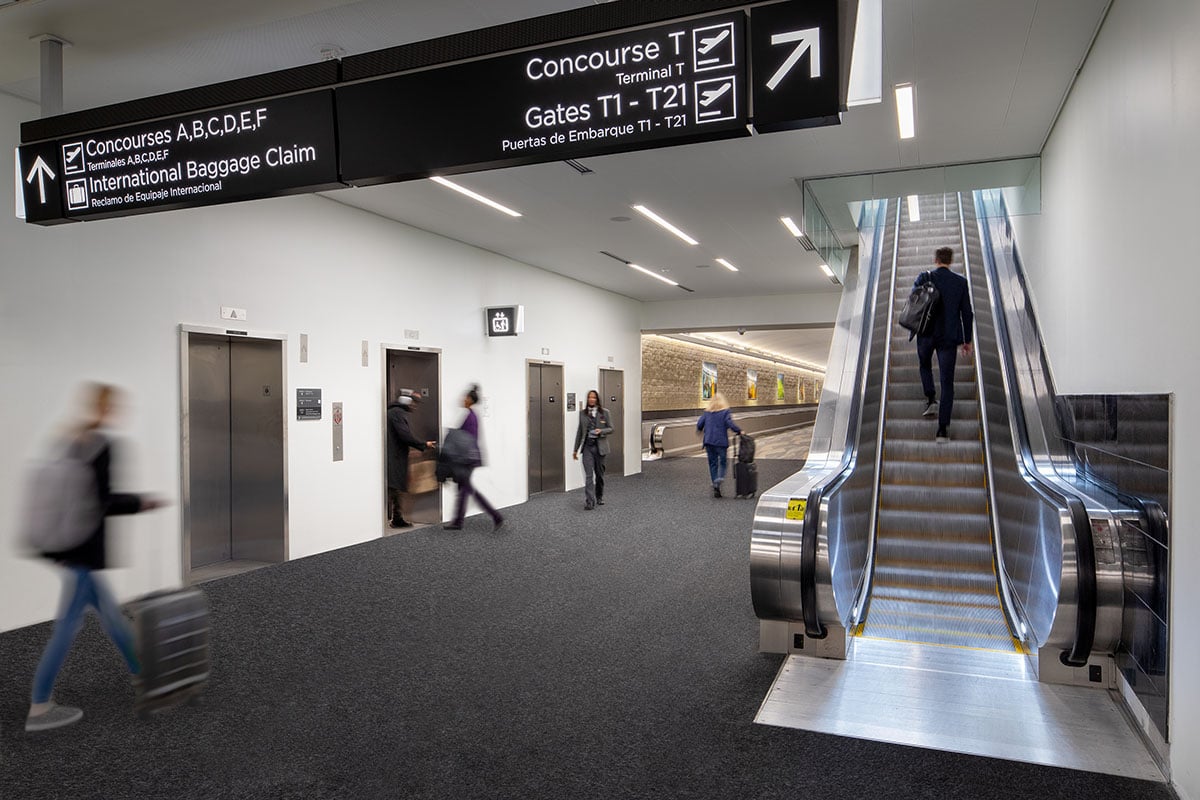
Aviation floor coatings are protective floor systems engineered for the chemistry, mechanical loads, and regulatory environment of aircraft hangars and airport facilities. Unlike warehouse epoxies, airport floor coating systems must resist phosphate-ester hydraulic fluids (Skydrol, Hyjet), jet fuel, deicing chemicals, hot-tire pickup, and meet FAA, NAVFAC, or USACE documentation expectations on federal scopes.
A hangar floor that turns soft and peels eighteen months after install almost never fails because of traffic. It fails because the coating couldn’t handle a phosphate-ester hydraulic fluid drip – a fluid no warehouse epoxy is rated for. Multiply that by hot-tire pickup, deicing fluid soak cycles, and FAA expectations on line markings and FOD control, and the gap between a generic industrial coating and a true aviation-grade system becomes a budget problem.
Aviation floor coatings and airport floor coating systems sit in a different operating envelope than any other industrial floor. The chemistry exposure profile, the mechanical loads, and the regulatory layer all push the spec further than a standard manufacturing floor ever needs to go. This guide walks through how the four chemistries used in aviation actually perform, which one fits which facility type, and why surface preparation – not the coating itself – is usually the difference between a 5-year and a 15-year service life. It draws on Socium’s aviation coatings work across hangar and airport-side scopes in the Southeast.
Why Aviation Floors Fail Differently Than Other Industrial Floors
A hangar is not a warehouse with airplanes. The combination of fluids in routine contact with the slab, the load profile of aircraft and ground support equipment, and the visibility and FOD requirements all change what “durable” actually means.
The Aviation Chemical Exposure Profile
Skydrol® and Hyjet® – the phosphate-ester hydraulic fluids used in most modern commercial aircraft – aggressively soften standard amine-cured epoxies. Jet A and Jet A-1 are petroleum distillates that don’t dissolve a properly cured epoxy quickly, but cause swelling and softening over years of repeated contact. Deicing fluids cycle through Type I (heated propylene glycol) and the thickened Type II–IV variants, all of which sit on the slab through freeze-thaw cycles. Add engine oils, brake fluids, and the lead-acid batteries still common in general aviation, and the floor sees a chemistry profile that a “warehouse-grade epoxy” data sheet never accounts for.
Mechanical Loads That Outlast Manufacturing Floors
Point loads under main landing-gear tires concentrate weight in a small footprint, especially during nose-wheel rotation under engine power. Hot-tire pickup – where a soft topcoat releases from the slab when warm rubber is parked on it – is the most common cosmetic failure mode in hangar floors. Tugs, tow-bars, and ground support equipment add directional drag wear that polished concrete can’t survive long-term.
The FOD and Visibility Layer
Foreign Object Debris control is non-negotiable in any active hangar – a stripped fastener under a turbine intake is a six-figure event. A floor that hides debris because of color or texture works against FOD walks. Light reflectivity reduces the lighting load required for under-aircraft inspection and helps mechanics see what they’re looking at. Hangar floor coating selection should treat reflectivity and color as functional requirements, not aesthetics.
Comparing the Four Coating Chemistries Used in Aviation
There is no single “best” aviation floor coating. System choice tracks facility type, operating tempo, and chemistry exposure. The four chemistries that show up in real aviation specs are:
- Epoxy – high-build body coat for new-build hangars; the cost-effective default
- Polyaspartic – UV-stable, fast-cure topcoat for shutdown-sensitive hangars
- MMA (methyl methacrylate) – sub-2-hour return-to-traffic for 24/7 MRO and cold-weather installs
- Cementitious urethane – heavy-duty mortar for wash bays, engine test cells, and chemical-splash zones
Epoxy Floor Coating Systems – The Default for New-Build Hangars
A two-component thermoset, typically installed at 20–60 mil dry-film thickness in aviation use. Properly specified epoxy is the cost-effective body coat for most hangar floors and accepts a wide range of topcoats. The tradeoff: standard amine-cured epoxies degrade under prolonged Skydrol exposure, and most epoxies are UV-unstable, which matters when sunlight enters through hangar doors. Cure time runs 24–72 hours to traffic with a 7-day window to full chemical resistance. Best fit: new construction, scheduled-shutdown hangars, FBO and general aviation facilities – almost always paired with a urethane or polyaspartic topcoat for UV and chemical uplift.
Polyaspartic Floor Coating Systems – The Fast-Cure Topcoat
Polyaspartic is an aliphatic polyurea derivative, applied at 4–10 mil over a base coat. The advantage is operational: 1–2 hours to return-to-traffic, UV stable, with strong gloss and color retention over time. The constraint is build thickness – at typical mil thickness, polyaspartic is a topcoat, not a standalone body system. Material cost per gallon is higher than epoxy. Best fit: hangars that can’t absorb a 72-hour shutdown, and airport public-side floors where UV stability and color retention matter.
MMA Floor Coating Systems – The Cold-Weather and Rapid-Return Option
Methyl methacrylate is a reactive resin that polymerizes in roughly 60–90 minutes and reaches full chemical resistance within hours rather than days. MMA cures at temperatures down to approximately 0°F, which matters in unheated hangars during winter installs. It also resists Skydrol better than most epoxies. The tradeoffs are real: a strong monomer odor during installation that requires ventilation planning, higher material cost, and a narrower base of contractors certified to install it correctly. Best fit: 24/7 MRO operations, cold-climate hangars, and aviation paint shops where shutdown windows are measured in hours.
Cementitious Urethane Systems – Heavy-Duty for Wash Bays and Engine Test Cells
Polyurethane modified with a cementitious filler, installed as a 1/4″ trowel-applied mortar. It tolerates thermal shock from hot wash water, extreme abrasion, and aggressive chemical splash. The aesthetics are utilitarian and the installed cost is the highest of the four. It’s specified less often for the main hangar bay and more often for aircraft wash bays, engine test cells, paint-stripping booths, and fuel tank cleaning rooms, where the operating environment justifies the spec.
Choosing Airport Floor Coating Systems by Facility Type
The right system tracks the facility, not the marketing literature. Airport floor coating systems sort cleanly into four categories.
Commercial Air Carrier and Wide-Body MRO Hangars
Heavy GSE traffic, 24/7 operations, and the highest fluid exposure in aviation. The typical specification combines a high-build epoxy body coat at 40–60 mil with a polyaspartic or aliphatic urethane topcoat for UV and abrasion. MMA earns its premium in the bays where shutdown cost outweighs material cost – a single MRO bay producing revenue 24 hours a day cannot absorb a week-long epoxy cure.
General Aviation, FBO, and Flight School Hangars
Lower mechanical loads and a lighter fluid profile, but UV exposure through often-open hangar doors becomes the dominant durability factor. A 20–30 mil epoxy body coat with a UV-stable urethane or polyaspartic topcoat is the common baseline, with tug-path and tie-down line markings integrated into the coating system rather than painted on top.
What standards apply to military and federal hangar floors?
Federal hangar specifications often reference MIL-PRF-32171 or facility-specific NAVFAC and USACE guide specifications. FAA advisory circulars – particularly AC 150/5340-1 for line markings – apply where a hangar footprint includes movement-area markings. [verify with Socium SME: which mil-specs and FAA advisory circulars apply to which Socium aviation scopes]. Static-dissipative flooring is a standard requirement in avionics rooms, ammunition storage, and fueling areas. On federal scopes, compliance documentation discipline – submittals, test reports, daily QA logs – matters as much as the chemistry on the can. Socium handles those packages under the same operating model used for federal painting compliance documentation on federal-grade scopes.
Airport Public-Side and Terminal Floors
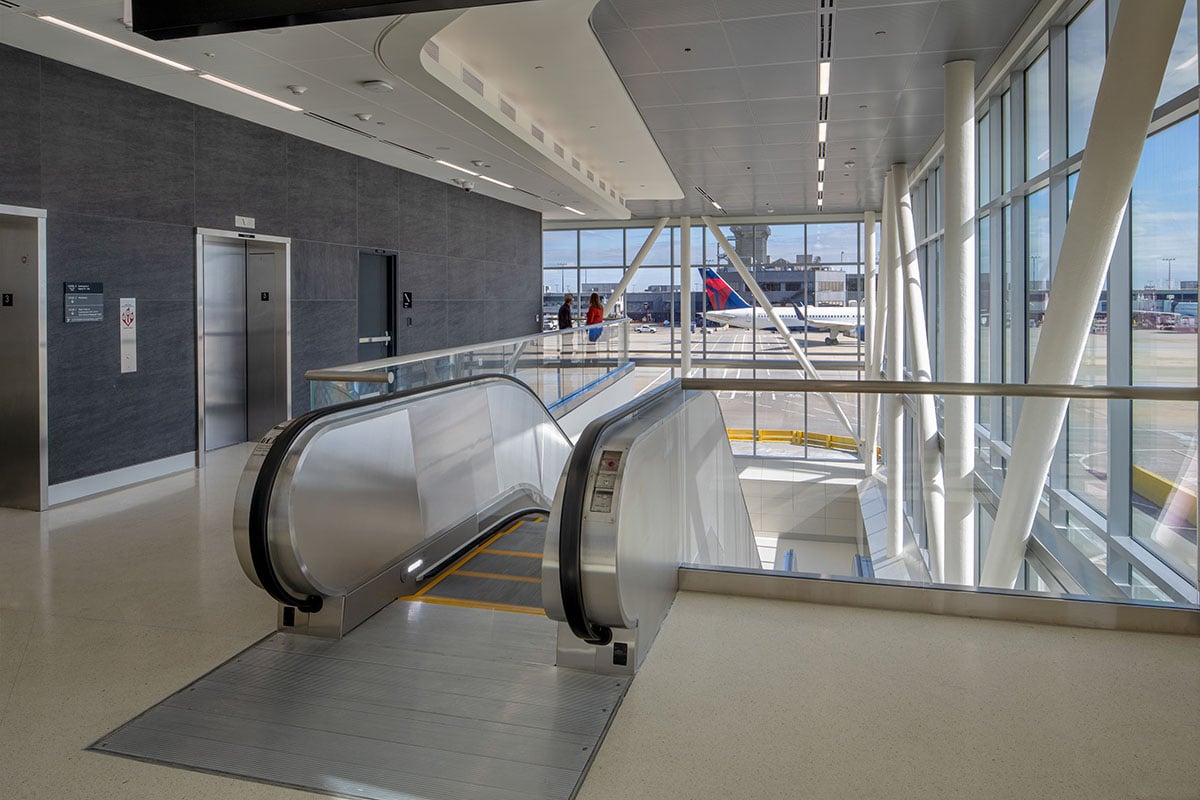
A different problem set entirely: high pedestrian traffic, baggage cart loading, wet-condition slip resistance, and aesthetics that match terminal design intent. Decorative quartz or flake epoxy systems with a polyaspartic topcoat are the common solution, with the spec tuned for traffic durability and stain resistance rather than jet fuel chemistry.
Surface Prep and Specification Discipline – Where Most Aviation Floors Actually Fail
The coating chemistry gets blamed when a hangar floor delaminates. The surface prep is usually responsible. Aviation slabs are often 30+ years old, may have been sealed or painted multiple times, and frequently sit over expansion joints that were never properly addressed. Specification quality at the bid stage determines whether the coating ever has a chance.
What concrete surface profile (CSP) does an aviation floor coating need?
The ICRI CSP scale runs from CSP-1 (acid-etched) to CSP-9 (heavy scarification). Thin-film epoxies need a minimum CSP-3 profile. High-build systems perform best on CSP-5. Cementitious urethane mortars typically require CSP-6 or higher. Diamond grinding is the standard prep method in occupied facilities because it controls dust; shot-blasting is faster but disruptive in active hangars. Power-washing alone – still seen in some bid scopes – does not produce a profile and should not appear in any aviation floor coating specification.
Moisture Vapor Transmission and Slab Conditions
ASTM F1869 (calcium chloride) and ASTM F2170 (in-situ relative humidity) testing should run before any aviation floor coating is specified. Older hangar slabs without intact vapor barriers can drive moisture vapor up through the coating, blistering and delaminating it within months. When MVT exceeds the topcoat manufacturer’s threshold, a moisture-mitigation primer is non-negotiable – adding it after a failure costs 3–5x what it would have at install.
Specification Detail That Reduces Risk
A spec that names a chemistry class – “high-build novolac epoxy with aliphatic polyaspartic topcoat” – protects against product substitution that may not meet the same chemical-resistance ceiling. Calling out CSP grade, dry-film thickness ranges, MVT testing requirements, and chemical-resistance ASTM references puts measurable acceptance criteria into the bid documents. Specifying a contractor profile – federal-eligible, aviation-experienced, surface-prep certified – matters as much as the product. Socium pairs that spec discipline with the operational reality of working around live aviation operations, with detail covered in its aviation hangar coatings work.
Why Aviation Programs Trust Socium Coatings
Aviation floor coating projects fail or succeed at the intersection of chemistry selection, surface preparation, and compliance documentation. Socium operates to federal and aviation-grade standards as a baseline, holds Native American Business Entity (NABE) certification, and runs the surface-prep and submittal discipline that hangar and airport scopes require. That work happens around live operations – not on paper.
If you’re scoping a hangar floor recoat, an MRO bay buildout, or an airport-side terminal floor, connect with Socium Coatings to walk the slab and align the system to the facility – before the spec gets locked in.




Leave A Comment