
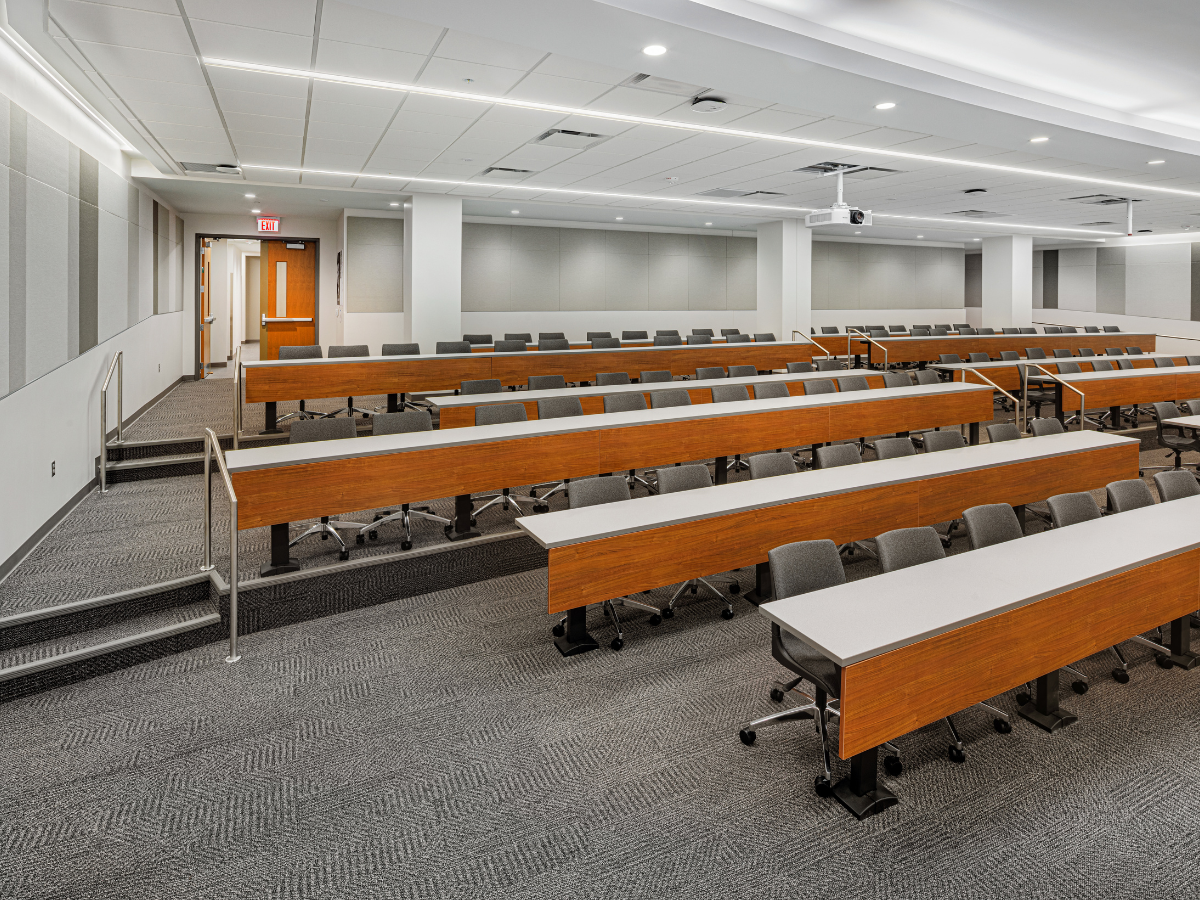
Educational campuses are unique environments with demanding performance expectations. From classrooms and labs to large residence halls and support spaces, coatings must balance durability, indoor air quality, safety, and long-term maintenance. In higher education settings—where thousands of students, faculty, and staff occupy buildings daily—the wrong coating choice can lead to premature wear, increased maintenance costs, and compromised indoor environments.
The challenge is particularly acute on large campuses like those of the University of Georgia (UGA), where we’ve completed impactful work including full painting and fabric panel installation for the UGA 1st Year Residence Hall, and a comprehensive paint project for the UGA Poultry Science Complex—a six-story facility featuring classrooms, labs, offices, and dedicated research and student spaces. These projects reflect the complexity and scale of higher education needs.
Choosing the right coatings for educational campuses is more than an aesthetic decision. It requires understanding how coatings perform under heavy use, how they support health and safety standards, and how they contribute to campus longevity.
Why Coating Selection Matters in Educational Environments
Educational buildings face relentless activity. Hallways, common areas, and student-centered facilities see heavy foot traffic every day. Coatings in these spaces must withstand abrasion, scuffs, impacts, and frequent cleaning while maintaining a visually appealing, functional surface.
Modern coating systems go beyond basic paint. They are engineered for specific performance characteristics important to educational facilities:
-
Durability and scuff resistance – classrooms and corridors experience constant interaction with furniture, backpacks, and cleaning equipment. Robust coatings reduce the need for frequent touch-ups and repainting.
-
Indoor air quality – coatings with low emissions help maintain healthy air in densely occupied buildings. Many educational standards and building guidelines require low-emitting materials to minimize volatile organic compounds (VOCs).
-
Maintenance efficiency – seamless, stain-resistant coatings allow cleaning crews to address spills, marks, and daily wear with less labor and fewer chemicals.
-
Safety and performance – in high-use areas like gyms and labs, specialty coatings improve slip resistance, chemical resistance, and wipe-down durability.
The right coating system reduces downtime for rework and helps campuses sustain high standards of appearance and performance even under heavy use.
Educational Campus Considerations Beyond Aesthetics
1. Student Health and Indoor Air Quality
Coating products impact indoor environmental quality. Standards like the Collaborative for High Performance Schools (CHPS) and other green building criteria emphasize that paints and coatings meet strict VOC limits and low-emitting material thresholds.
Selecting low-VOC or zero-VOC coatings helps reduce chemical exposure for students and staff—an important consideration for campuses with labs, residence halls, and dining facilities where indoor air quality directly affects comfort and health.
2. Durability Under Daily Use
Resinous flooring solutions, epoxy systems, and high-performance interior coatings perform much better than traditional paints in high-traffic zones. According to industry analysis, these coatings resist scratches and spills while making daily cleaning more efficient—an essential benefit in hallways, cafeterias, and lecture halls.
3. Specialized Functional Areas
Certain campus spaces have unique needs:
-
Science and tech labs often benefit from chemical-resistant coatings to withstand spills and cleaning agents.
-
Gymnasiums and locker rooms need slip-resistant floor systems to enhance safety.
-
Libraries and study areas require coatings that minimize wear while contributing to quiet, comfortable learning environments.
Our work at UGA reflects this variety. The Poultry Science Complex, for example, includes teaching labs and research spaces that require both performance and resilience.
Color, Branding, and Campus Identity
Beyond functional performance, coatings contribute to campus identity. A carefully chosen palette not only enhances wayfinding and space perception but can reinforce school spirit and branding. Architectural coatings in educational settings often incorporate color while maintaining cleanability and durability—helping facilities strike a balance between form and function. Sherwin-Williams
Coating Systems, Standards, and Compliance
Educational campuses often pursue certifications or sustainability standards that include coating criteria. For example:
-
Green Seal GS-11 standards specify limits for VOC content and environmental performance in paints and coatings.
-
Many institutions reference LEED Indoor Environmental Quality credits for low-emitting materials when selecting coatings.
Meeting these standards is not just about compliance—it supports healthier learning environments and reduces lifecycle impacts.
Why Professional Application Matters
Great coatings begin with great products—but they only perform as well as the installation behind them. Surface preparation, proper drying conditions, sequencing with other trades, and detailing are all part of delivering a long-lasting result. Coordination with general contractors and facility teams ensures minimal disruption to campus life, especially when work occurs during breaks or between semesters.
On large education projects like the UGA 1st Year Residence Hall, precise planning and execution made it possible to integrate coatings work seamlessly into broader construction schedules.
Conclusion
Choosing the right coatings for educational campuses is a strategic decision that impacts durability, indoor air quality, maintenance costs, and user comfort. From classrooms and residence halls to specialized labs and common areas, coating systems must meet high standards for performance, safety, and sustainability.
For university and college facilities—where longevity and occupant health are priorities—the right coatings partner makes all the difference. At Socium Coatings, we’ve delivered solutions that support long-term functionality and aesthetic excellence across higher education environments. Learn more about our higher education solutions here!