
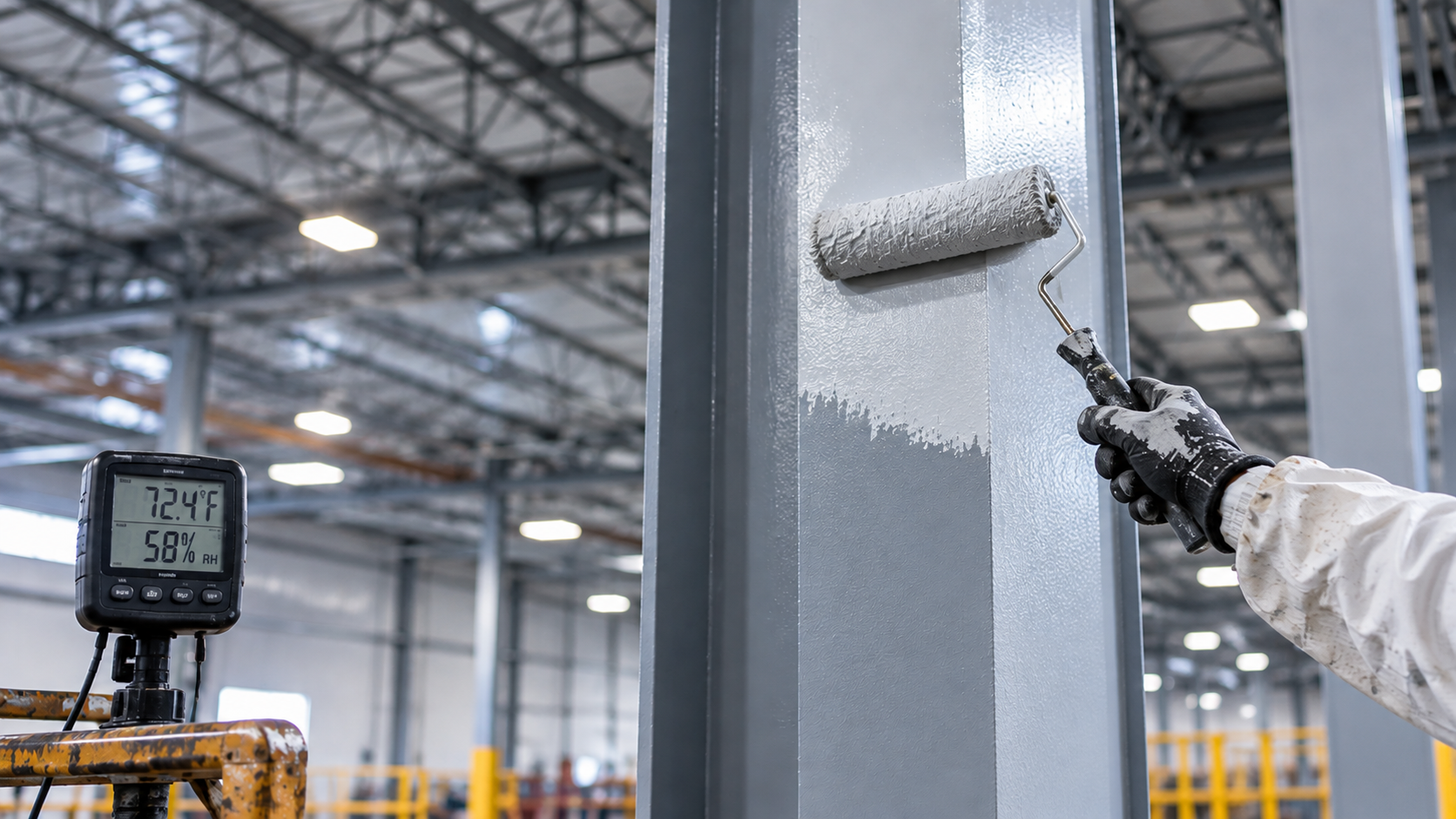
Temperature and humidity play an important role in the success of industrial painting projects. In warehouses, manufacturing facilities, and other industrial buildings, environmental conditions can affect how paint spreads, dries, adheres to surfaces, and performs over time. Even when the correct coating system is selected, applying it under unsuitable conditions can lead to finish defects, delays, and premature coating failure.
Understanding how temperature and humidity affect industrial paint application helps facility managers, contractors, and property owners plan projects more effectively. Monitoring environmental conditions before and during application can help teams achieve a consistent finish while reducing avoidable rework.
Why Temperature Matters During Industrial Paint Application
Temperature influences the way coatings flow, cure, and bond to a surface. Every coating product has its own application requirements, so the acceptable temperature range depends on the manufacturer’s specifications and the type of material being applied.
How Low Temperatures Affect Paint Performance
Low temperatures can slow the drying and curing process of many industrial coatings. Paint may remain wet or tacky for longer than expected, delaying subsequent coats and extending the overall project schedule. Some products may also become more difficult to apply evenly when temperatures fall outside their recommended range.
In industrial facilities, these delays can affect access to work areas, equipment movement, production schedules, and coordination with other contractors. Applying coatings before conditions are suitable can also compromise the final result.
What Happens When Temperatures Are Too High?
High temperatures can create a different set of challenges. Some coatings may dry too quickly, reducing the time available for application and leveling. This can contribute to uneven finishes, visible lap marks, or other application defects, depending on the product and conditions.
Hot surfaces can be particularly problematic because their temperature may be higher than the surrounding air temperature. A metal structure exposed to direct sunlight, for example, can become much hotter than the ambient conditions suggest.
Contractors should therefore assess both the air temperature and the temperature of the surface being coated, using the limits specified for the product.
How Humidity Influences Industrial Coatings
Humidity affects how moisture interacts with paint during application and curing. Its impact depends on the coating chemistry, the surface material, and the surrounding environmental conditions.
High Humidity and Extended Drying Times
High relative humidity can slow the drying of some coatings, particularly products that rely on water evaporation. This may extend the time before a surface can be recoated or returned to service.
Certain coatings are also sensitive to moisture during application or curing. If the environmental conditions exceed the manufacturer’s limits, the finish may develop defects or fail to achieve the expected performance.
These risks are especially important in facilities where work must be completed within a defined maintenance window. Allowing sufficient time for drying and curing helps prevent premature use of newly coated surfaces.
Low Humidity and Rapid Moisture Loss
Low humidity can cause water-based coatings to lose moisture rapidly under some conditions. Combined with elevated temperatures or strong airflow, this may interfere with proper film formation and produce an uneven finish.
However, low humidity does not automatically make conditions unsuitable for painting. The effect depends on the specific product, surface temperature, airflow, and application method. Contractors should evaluate these factors together rather than treating humidity as an isolated measurement.
The Risk of Condensation on Industrial Surfaces
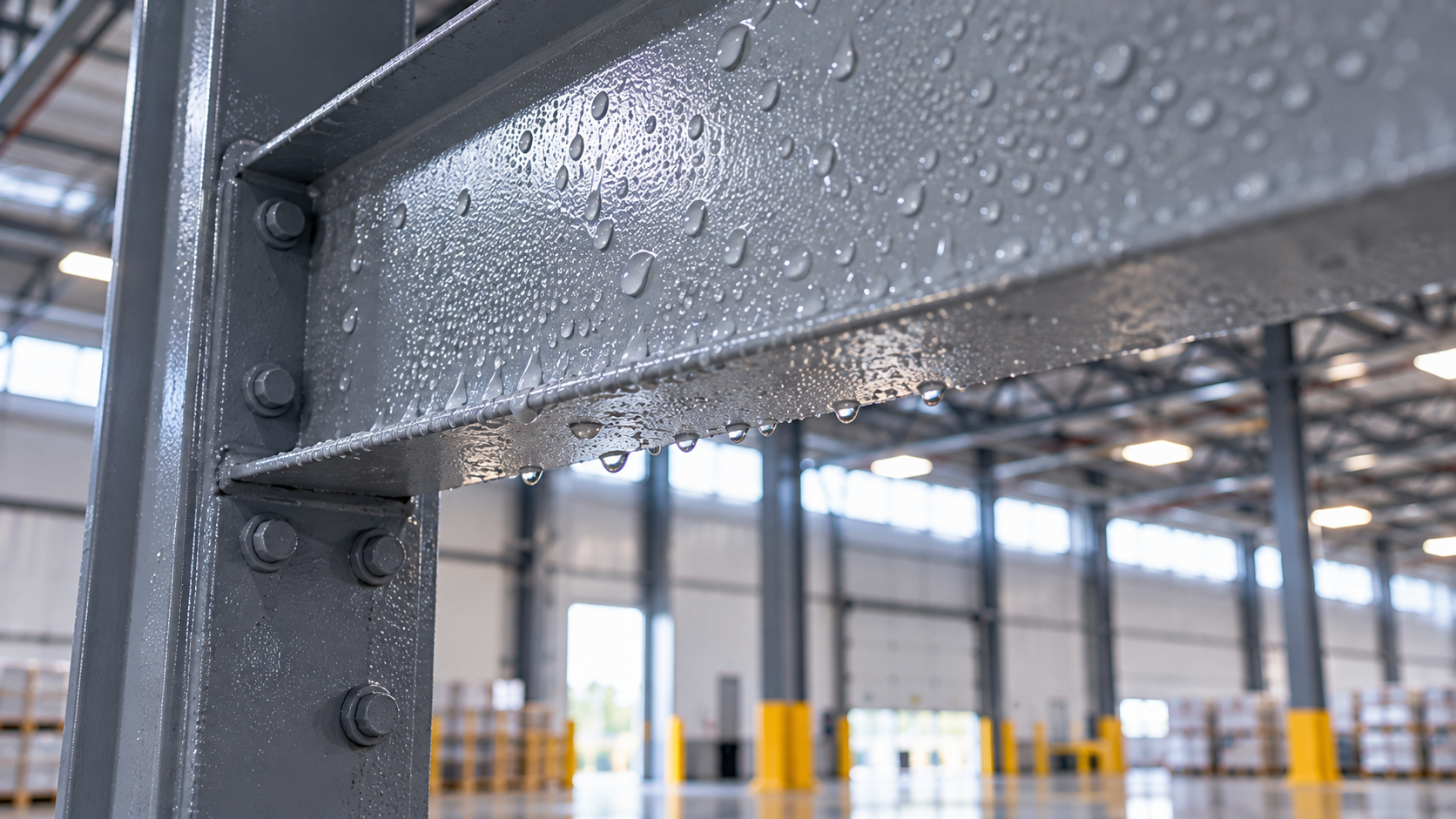
Condensation is an important consideration when evaluating environmental conditions for industrial painting. It occurs when a surface cools to or below the surrounding air’s dew point, allowing moisture to form on that surface.
Even when a surface appears dry, an invisible film of moisture can interfere with coating adhesion. This is particularly relevant for metal structures, where condensation can contribute to adhesion problems and corrosion beneath a coating.
Understanding Dew Point Before Application
The dew point indicates the temperature at which moisture begins to condense from the air. Before applying many industrial coatings, contractors need to verify that the surface temperature is sufficiently above the dew point, according to the coating manufacturer’s requirements and the applicable project specification.
This is why checking air temperature alone is not enough. Relative humidity, dew point, and surface temperature provide a more complete picture of whether conditions are suitable for coating application.
Where Condensation Risks Are Common
Condensation can be a concern in warehouses with poorly controlled ventilation, facilities exposed to rapid temperature changes, and buildings where cold surfaces meet warm, humid air. Metal roofs, structural steel, pipes, and equipment can be particularly vulnerable under the right conditions.
Identifying these risks before work begins helps contractors determine whether the surface needs additional drying, environmental conditions need to stabilize, or application should be postponed.
How Environmental Conditions Affect Different Industrial Facilities
Temperature and humidity do not affect every industrial painting project in the same way. The facility’s operating environment, building design, surface materials, and coating specifications all influence the approach required.
Warehouses and Distribution Centers
Large warehouses may experience temperature variations between loading areas, exterior walls, roof spaces, and interior storage zones. Open loading doors can introduce humid air, while poorly insulated surfaces may experience condensation during changing weather conditions.
Before painting, contractors should assess the areas included in the project and identify locations where conditions may differ significantly. This is particularly important when work spans large spaces or multiple shifts.
Manufacturing Facilities
Manufacturing environments can introduce additional variables, including heat from machinery, process-related moisture, ventilation systems, and changing production conditions. These factors can make environmental conditions less consistent across the facility.
Coordinating painting work with facility operations allows the project team to identify suitable work areas and application windows. Where necessary, the team can sequence the project so that coatings are applied under appropriate conditions without creating unnecessary disruption.
Metal Structures and Industrial Equipment
Metal surfaces can heat up and cool down quickly, making surface temperature and condensation important considerations. Coatings applied to steel structures and equipment may also have specific requirements related to corrosion protection, film thickness, and curing.
Contractors should verify the relevant product data and surface conditions before beginning work. The requirements for one coating system should not be assumed to apply to another.
Get Industrial Painting Done Right with Socium Coatings
Successful industrial painting requires more than choosing a suitable coating. Temperature, humidity, surface conditions, and application timing all influence the quality and performance of the finished work. At Socium Coatings, we understand the importance of planning industrial painting projects around facility requirements and the conditions needed for proper coating application.
Contact our team to discuss your warehouse or industrial facility painting project and how we can help you plan for a durable, professional finish.





Leave A Comment